To free the shares you had to move them, and the constitution said you could not.
North Macedonia had the diagnosis and wanted the cure. We solved the constitutional puzzle that had blocked it, drafted the law to enact it, and set out the plan to pass it.
 Location / capital-markets photography
North Macedonia had decided to act. Its 1990s Mass Privatisation Programme had handed shares to more than 300,000 citizens, and a generation later tens of thousands of those accounts had gone dark: roughly 60,000 owned by real people who had not touched them in five years or more, holding close to €900 million in shares they had stopped watching. Alongside them sat more than 280,000 “empty” accounts the national depository was not even permitted to close.
The whole mass choked a market that was already thin, where daily trading had fallen from €2.6 million a decade earlier to under €0.7 million. The country’s Securities and Exchange Commission had seen the regional study that first measured this problem and wanted the next thing: not another diagnosis but the law and the plan to fix it. The EBRD asked us to design the solution, draft the legislation to enact it, and set out the action plan to carry it through.
- Desk research
- Interviewing
- Workshop facilitation
- Stakeholder validation
- Verification & triangulation
- Market & landscape analysis
- Regulatory & legal analysis
- Going-concern valuation
- Listed / market valuation
- Framework development
- Solution & mechanism design
- Governance design
- Fund structuring
- Legislative & regulatory drafting
- Recommendation & roadmap design
- Executive & board-grade communication
- Synthesis & report writing
 Beneficiary
 Administered by
One market. Taken all the way.
1 60,476 natural-person accounts inactive for 60 months or more, of 67,430 in total.
2 €344.9m listed plus €561.9m unlisted.
3 The listed dormant holdings equalled 8.8% of listed market capitalisation.

This wasn’t a market problem. It was a legal one.
The obvious fix, sweeping the dormant holdings into a professionally managed fund, ran straight into the Constitution: ownership and property rights are guaranteed there, and moving a citizen’s shares without their say could be read as confiscation. The depository could not close an abandoned account, no law defined what “dormant” even meant, and there was no statute of limitations to fall back on.
So the real task was never to invent a fund. It was to find a way, inside North Macedonian law, to move property belonging to people who were not answering, without taking anything from them. Everything else in the solution depended on solving that one problem first.
How we pulled it together
We turned down the comfortable option.
There were two ways to do it. The easy one handed the dormant accounts to the brokers and banks already in the market. We recommended against it: the accounts were too small and too numerous to be worth an intermediary’s time without a public subsidy, so the problem would be moved rather than solved. We pointed instead to the harder pooled-fund route.
The obstacle was constitutional.
Anyone can design a fund; the reason this had gone unsolved was that you could not legally move the shares into one. Our answer was a mechanism we called transmutation: a holder who did not respond had their shares converted into units of equal value in the fund, so nothing was taken, only changed in form. We showed it was already lawful, pointing to the forced transfers North Macedonian law permits with compensation.
We designed the machine, not just the idea.
We designed the whole apparatus: a fund company overseen by a supervisory board drawn from the depository, exchange, finance ministry and central bank, with independent voices to keep it honest, and two funds beneath it, one for listed shares run like a mutual fund, one for unlisted run like a private equity fund. Then we set it on a thirty-one month timeline naming who does what.
We wrote the law, we didn’t just recommend one.
Most advisers stop at ‘here is what you should do.’ We drafted it: a new Law on the Management of Dormant Securities Accounts, written as articles, with the Securities Law amendments and depository-rule changes that had to sit alongside it. Statute drafted in English for the government to translate, table and pass.
What we delivered
This problem had two halves that had to be held by different people: knowing how to build the solution, and knowing North Macedonian law, its constitution in particular, well enough to move a citizen’s shares without breaching it. A brilliant design that turned out to be unconstitutional would have been worthless, and so would local legal knowledge with nothing to build.
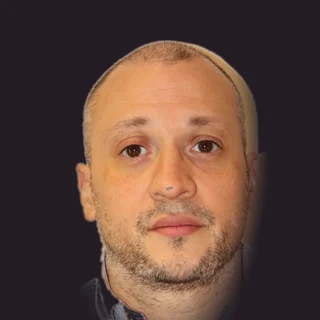
Thierry Clarke led as international consultant and project leader: sizing the problem, designing the pooled-fund solution and the transmutation mechanism that answered the constitutional question, testing it against the alternative, and carrying the drafting of the legislation and the action plan. He had led the earlier regional study that first measured the problem.
The legal half we did not attempt alone. We worked in conjunction with Polenak, one of North Macedonia’s leading law firms, whose lawyers held the Macedonian legal ground from the inside: mapping the constitutional constraints, finding the domestic precedents that made transmutation defensible, and turning the solution into legislative text that fit the country’s own law.
 Thierry Clarke